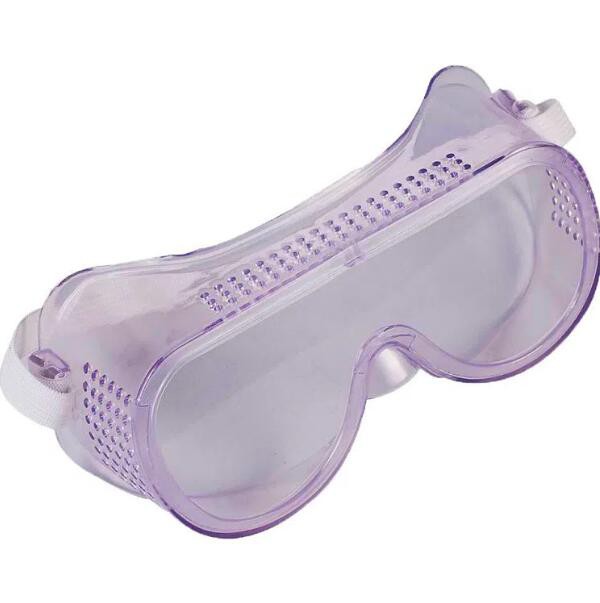
If your eyes might hurt while working or playing, "wear protective lenses". Eye protection safety glasses are the choice of most people to protect their eyes. Especially if you know you will be in an environment where you may be exposed to any kind of substance that is harmful to your eyes, splashes or particles that may float.
A good rule of thumb is to take action and always use protective eyewear.
Often at home, while playing, in an office or industrial environment, we don't perceive any potential eye hazards. Or; we tend to ignore the common sense side of the equation and convince ourselves by not enforcing a policy of self-regulating caution on ourselves or our employees.
Certain areas or tasks around the yard or house, office, playground or work do not require us to wear goggle safety glasses. This is a simple solution and I think a self-regulatory policy should be implemented immediately. If you offer a variety of types, styles or even prescription glasses and safety sunglasses, it is easy to implement procedures, especially at work, so that people are able to perform the task at hand as expected.
Anyone who has worked in an industrial manufacturing environment knows that flying objects from different workstations can vary a lot. There are such things as; dust, glass, wood, metal and various other particles. Keeping your eyes protected with the proper glasses is an easy way to help prevent someone from suffering an eye injury.
As humans, our eyes are susceptible to injury and need protection from certain tools, instruments and work environments. I see this as a normal evolutionary step toward a safe work environment. Solid materials pose the greatest threat to the safety of an individual's eyes.
May I introduce the concept of non-physical situations such as chemical, radiation or biological hazards? Here, one must avoid eye and skin injuries and make sure you are not exposed to any of these unseen threats.
The best way to protect yourself or your employees is to make sure you are using the correct type of safety lenses according to government or industry recommended standards. Between you and me; I will follow the recommendations for the best safety for people.
Wearing the correct type of safety lenses depends on all possible threats or hazards that exist in the work, recreational or sports environment. The organizations that recommend eyewear all agree that side shields or wrap-around protection should be worn when flying particulate matter is present.
Next; if chemicals are present, different types of goggles can be formed on the face and eye area to protect against splashes and fumes.
Finally, there may be radiation and biohazards. They manufacture special protective equipment designed with masks, helmets, masks with full facepiece respirators. Depending on the situation; choose wisely when it comes to protecting your eyes or those of your employees.
There are other ways to protect your eyes from harm. Know your work environment and the area around you. Here are some tips! Start by looking around your work area. Assess the location and conditions of the area you are working in. Ask yourself, what type of work will you be doing? If you know of the possibility or likelihood of particulate matter being present, inform other workers around you. This will remind them to wear safety glasses while working.
If you need corrective lenses, make sure you use the correct type of prescription safety glasses. If none are available, notify your supervisor or superior and ask for your next course of action.
There are two main reasons people don't wear goggles. For most people, they are; comfort and site obstruction.
Follow our theme; always be safe. When purchasing goggles, choose the type that performs the following actions! One; fits two; comfortable three; uses corrective lenses (if needed), four; looks good on you, five; do they need to be worn according to the type of style you want to use them in? Now; lastly, I think it is as important as all the other factors. Can I perform a task or job without causing trouble?
Let's do a quick review; make sure the type of eyewear you wear meets the requirements of the hazmat around you. Take care of yourself, take charge of your eye protection and wear the proper safety glasses.
Don't forget! As with any other piece of equipment, there are general maintenance requirements and safety glasses are no exception. I recommend taking good care of your safety glasses. If your lenses fog up and become a problem to see while you are wearing them, you have several options. They make anti-fog coatings and in some lens types have vents (slots) on their side shields.
The invention of polycarbonate material has enabled manufacturers and designers to create impact-resistant designer-style safety glasses. This material also helps designers create lightweight, anti-fog and impact-resistant lenses and frames. One of the benefits and cost savings of this type of lens is the durability and scratch resistance that can be achieved with this material.
Always keep this in mind in any environment where you are not sure if it is a good idea to wear safety glasses. It's a fact to remember! There are 2,000 or more reported eye trauma injuries every day and OSHA states that 90% of them could have been avoided if proper eye protection safety glasses were worn. So; from this professional! If you have any doubt in your mind whether you should wear safety glasses; put them on.
YULONG Safety Tools Manufacturer Corp.,Ltd. is a professional safety equipment producer in China with more than 20 years. We are Specialized in Head Protection, Eye and Face Protection, Hearing Protection, Respiratory Protection, Knee Protection etc. YULONG SAFETY has passed ISO 9001 Internal Quality system Certification. All product passed CE, ANSI, CSA, EMC etc. With experienced development teams and complete production supporting facilities.
Warmly welcome to cooperate with your company. We’ll do the utmost to support you.
Phone
+86-579-82411268 +8615958954313
Address
No.361 Xinye Street, Chengbei Industrial Zone, Wucheng District, Jinhua City, Zhejiang Province, China.