


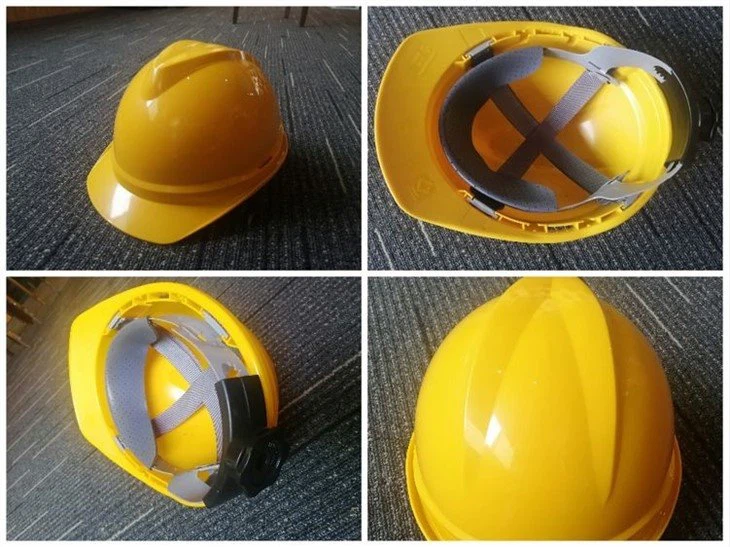

Industrial Safety Helmet
Color: Red, Orange, Yellow, Green, Blue, Grey, White or Color OEM
Carton size: 55*51*44 cm
G.W/N.W: 10/9 KGS
Hot Selling Custom Industry Engineering Full Brim Safety Helmet American Hard Hat
Specification
Place of Origin | China |
Brand Name | OEM or YULONG |
Model Number | CF48 |
Color | Red, Orange, Yellow, Green, Blue, Grey, White or Color OEM |
Carton size | 55*51*44 cm |
G.W/N.W | 10/9 KGS |
Material | ABS / PE |
Application | Construction / Forest / Garden Helmets |
Function | The head can be protected when falling objects occur from high altitude |
Certificate | CE / UKCA /ANSI |
Packing | 25pcs/carton |
Pictures


Industrial Safety Helmets: Your Ultimate Guide to Head Protection in the Workplace
Working in industrial settings like construction sites, factories, and warehouses poses inherent risks that make personal protective equipment indispensable. Among the most vital gear is the industrial safety helmet, designed to shield your head against on-site hazards.
This comprehensive guide will provide an in-depth look at industrial safety helmets. We’ll review their critical purpose, inner workings, regulatory standards, and proper use protocols. Learn what to look for when selecting a helmet and how to get the longest service life out of your equipment. Let’s explore how the hard hat has become an icon of workplace head protection.
Defining the Industrial Safety Helmet
Industrial safety helmets, commonly called hard hats, are specialized personal protective equipment designed to shield the head from injuries in work environments. Typically made of high-density polyethylene or advanced composites, these durable helmets safeguard against:
- Falling objects and debris
- Electrical shocks and burns
- Impacts from bumps or protrusions
- Chemical leaks or splashes
Safety helmets encase the head in a sturdy shell with an inner suspension harness for securing the helmet firmly and comfortably. They may also incorporate accessories like face shields, ventilation, headlamps, and even cameras.
The primary purpose remains to protect workers from preventable head trauma in hazardous work zone conditions that pose risks from above, around, and even below.
Components of Industrial Safety Helmets
While seemingly simple, industrial safety helmets have evolved through research and innovation into sophisticated protective tools. Here are the core components:
Outer Shell
The exterior casing of a hard hat must be extremely impact-resistant. Most feature a one-piece shell molded from rigid high-density polyethylene (HDPE) which compromises slightly to absorb energy. Advanced composites like fiberglass or Kevlar provide even greater strength.
Inner Harness
The suspension harness inside anchors the helmet firmly onto the wearer’s head. It typically comprises adjustable nylon straps connected to a headband with foam or vinyl pads that sit comfortably on the crown. The harness absorbs and distributes weight evenly while keeping the helmet secure.
Chin Strap
An adjustable chin strap fastens under the jaw to prevent the helmet from slipping during activity. In high-risk environments, a chin strap ensures the helmet stays on even if struck forcefully from below.
Standards and Regulations for Industrial Helmet Design
Industrial safety helmets must adhere to rigorous voluntary consensus standards and government regulations. Key ones include:
ANSI/ISEA Z89.1
The American National Standards Institute standard establishes performance and testing specifications. Helmets are safety-certified based on meeting criteria like impact absorption, penetration resistance, and electrical properties.
EN 397
The European standard provides similar specifications to ANSI but classifies helmets differently based on the intended industrial application and protections provided.
OSHA Regulations
The Occupational Health and Safety Administration mandates the use of ANSI or ANSI-equivalent helmets by workers under certain high-risk conditions to comply with US federal law. Non-compliance carries fines.
These benchmarks ensure all safety helmets meet minimum efficacy, materials, testing, and labeling thresholds before being declared certified for workplace use.
The Vital Importance of Industrial Safety Helmets
In physically demanding workplace settings, head protection is non-negotiable. Industrial helmets provide indispensable protections that have saved countless workers from severe harm:
Preventing Traumatic Head Injuries
Falling objects, overhead collisions, and accidental head impacts can cause concussions, traumatic brain injuries, skull fractures, and even death. Rigid safety helmets reduce force transmission and protect against penetrative trauma.
According to the Bureau of Labor Statistics, 20% of all workplace fatalities are caused by head injuries. Helmets dramatically reduce risk on worksites.
Legal and Liability Considerations
In the US and Canada, OSHA mandates employers provide compliant head protection and enforce helmet use for workers exposed to overhead falling risks and other hazards. Non-compliance carries heavy fines and liability implications.
If a worker experiences head trauma while not wearing a properly fitted safety helmet, the employer faces negligence lawsuits, damage payouts, PR backlash, and increased insurance costs for lapses in safety protocols.
From a legal, ethical, and financial standpoint, providing industrial helmets demonstrates a dedication to worker health. Their well-being and your organization's interests align through workplace head protection.
Different Types of Industrial Safety Helmets
Industrial helmets contain specialized components to protect against environmental risks workers face:
Class G - General Hard Hats
The most common, Class G helmets feature full top impact protection with optional relief channels to prevent heat buildup. Some provide secondary electrical resistance while others focus solely on impact. Class G includes helmets in a variety of colors and styles.
Class E - Electrical Hard Hats
Class E helmets are specially designed to insulate against high voltage open circuit electrical hazards like live wires. They utilize dielectric components that prevent current flow to protect against electrocution. Class E helmets are always orange to designate electrical rating.
Class C - Conductive Hard Hats
Class C helmets provide cushioned impact absorption like Class G but intentionally lack dielectric elements since they may hinder task performance. Instead, they ground the wearer preventing static buildup when working around flammable substances.
Specialty Helmet Features and Accessories
Today's safety helmets incorporate add-ons and options for customized protection:
- Integrated face shields for eye risks
- Overhead ventilation for cooling and airflow
- Headlamps and cap-mounted lighting for hands-free illumination
- Logo and text customization to show occupational specialty
- Badge slots to securely attach company ID cards
- Decals and color coding for quick role identification
- Cameras and communication gear mounting options
- Mask adapters to securely retain face masks
- Hearing protection integration like filtered ear muffs
- Stickers to log compliance inspection dates
The Formula for Calculating Industrial Helmet Lifespans
While ultra-durable, industrial helmets gradually degrade with use and require replacement. Follow this formula to determine the approximate service lifespan:
Helmet Lifespan (Years) = Inspection Interval (Months) / Inspections per Year
For example:
Helmet inspected every 6 months (twice per year):
Service Life = 6 Months / 2 Inspections per Year
Service Life = 3 Years
This simple formula ensures you get maximal value from safety helmets before replacement. Periodic inspection allows tracking wear.
Critical Thinking on Optimizing Industrial Helmet Safety
Getting the most protective value from safety helmets requires considering these factors:
Matching Helmet Class to Workplace Hazards
Select helmet type based on the specific hard hat capabilities required. Don't cut costs with a Class C where a Class E is mandated.
Optimizing Fit Comfort for Encouraging Compliance
A helmet only protects when worn. Prioritize comfort and ergonomics to ensure workers keep helmets on all shifts.
Promoting Helmet Pride and Ownership
Letting workers customize helmets makes them feel valued. This inspires them to protect and maintain their helmet as a symbol of workplace safety.
Replacing Old Helmets for Latest Innovations
Upgrade to the newest helmet models to incorporate the latest protective materials science and risk insights.
With deliberate matching, fitting, personalization, and upgrading, safety helmets provide their highest level of reliable protection shift after shift, year after year.
Common Industrial Helmet Mistakes and How to Avoid Them
While indispensable protection, industrial helmets can fall short of their lifesaving potential through misuse. Watch out for these common pitfalls:
Neglecting Regular Safety Inspections
Failure to inspect helmets routinely for cracks or degradation compromises safety. Implement formal inspection procedures every 6-12 months.
Using the Wrong Helmet Class for the Job
A Class C helmet won't prevent arc flashes. Select helmet type based on workplace risk assessments. Don't cut costs here.
Failing to Replace Damaged Helmets Promptly
Once degraded, helmets cannot offer full protection. Enforce replacing damaged helmets immediately before further wear.
Not Securing Chin Strap
An unsecured helmet risks falling off during work, exposing the head. Ensure chin straps are fastened snugly. Enforce their use.
Allowing Decorative Customization
While individualization promotes compliance, certain stickers and paints degrade helmet materials over time. Review suitability first.
Wearing Helmet Improperly
Incorrect helmet positioning sacrifices safety. Train workers on proper centering, tilt, and fit. Inspect for menswear.
With education, protocol improvements, up-to-date equipment, and refusal to cut corners, maintaining workplace helmet safety is straightforward. Protect workers via their most vital accessory - the iconic hard hat.


Hot Tags: industrial safety helmet, China, manufacturers, suppliers, factory, wholesale, price, for sale, made in China, safety helmet with visor, the best welding helmet, delta plus helmet, leather welding helmet, arborist hard hat, Industrial Safety Cap
Previous
Industrial Safety CapYou Might Also Like


Send Inquiry